

Dashboarding
Build metadata-driven dashboards in SolidX using backend data providers, frontend widget extensions, and user-specific layouts.
Dashboard Overview
SolidX dashboarding is a metadata-driven system for building operational and analytical dashboards without hard-coding each screen.
The dashboarding model is organized around four layers:
- Metadata-defined dashboard composition.
- Backend provider-driven data resolution.
- Frontend extension-driven widget rendering.
- Per-user layout personalization.
The queue health reference dashboard also includes a representative custom widget example, QueueSlaHeatmapWidget, which shows the intended model:
- Backend data providers remain mandatory.
- Custom frontend rendering stays optional.
- Explicit widget overrides are only introduced when the default framework widget set is not enough.
Mental Model
SolidX dashboarding is composed of four layers:
- Metadata defines the dashboard, variables, widgets, and default layout.
- Backend providers resolve widget data at runtime.
- Frontend widgets determine the rendering contract.
- User layout persistence personalizes arrangement without mutating the dashboard definition itself.
Dashboard Capabilities
Dashboard Metadata
Define dashboards, variables, widgets, layout items, and navigation metadata from the platform side.
Widget Data Provider
Implement and register backend providers that resolve the runtime data required by each widget.
Widget UI
Understand the frontend rendering contract and when custom widget components are necessary.
Implementation Templates
Use the templates as implementation starting points for dashboard-related backend and frontend work.
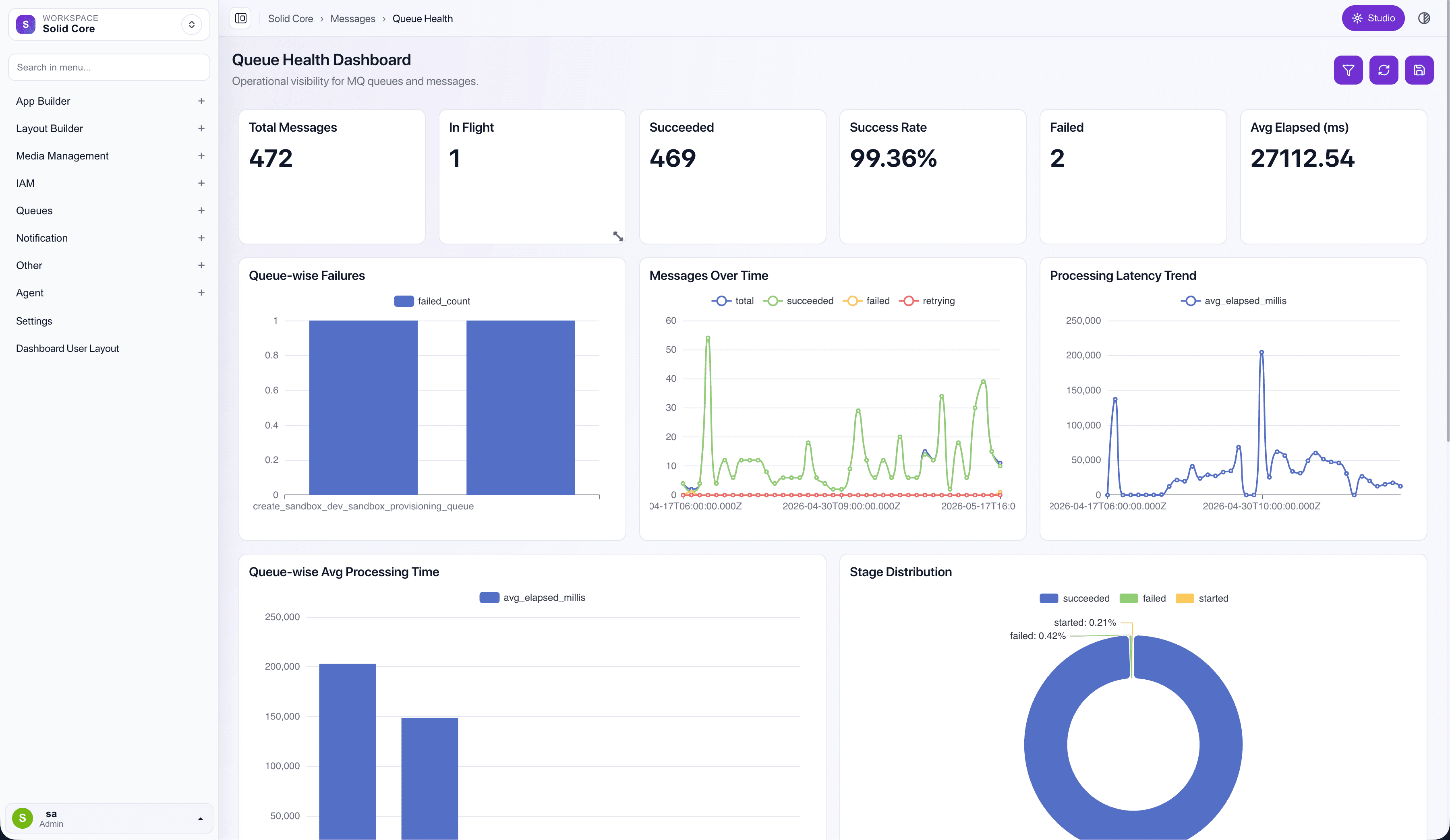
Sample Dashboard
Source of Truth
Dashboard definitions are resolved from module metadata JSON (dashboards section).
Only user-specific layout overrides are persisted in the database.